
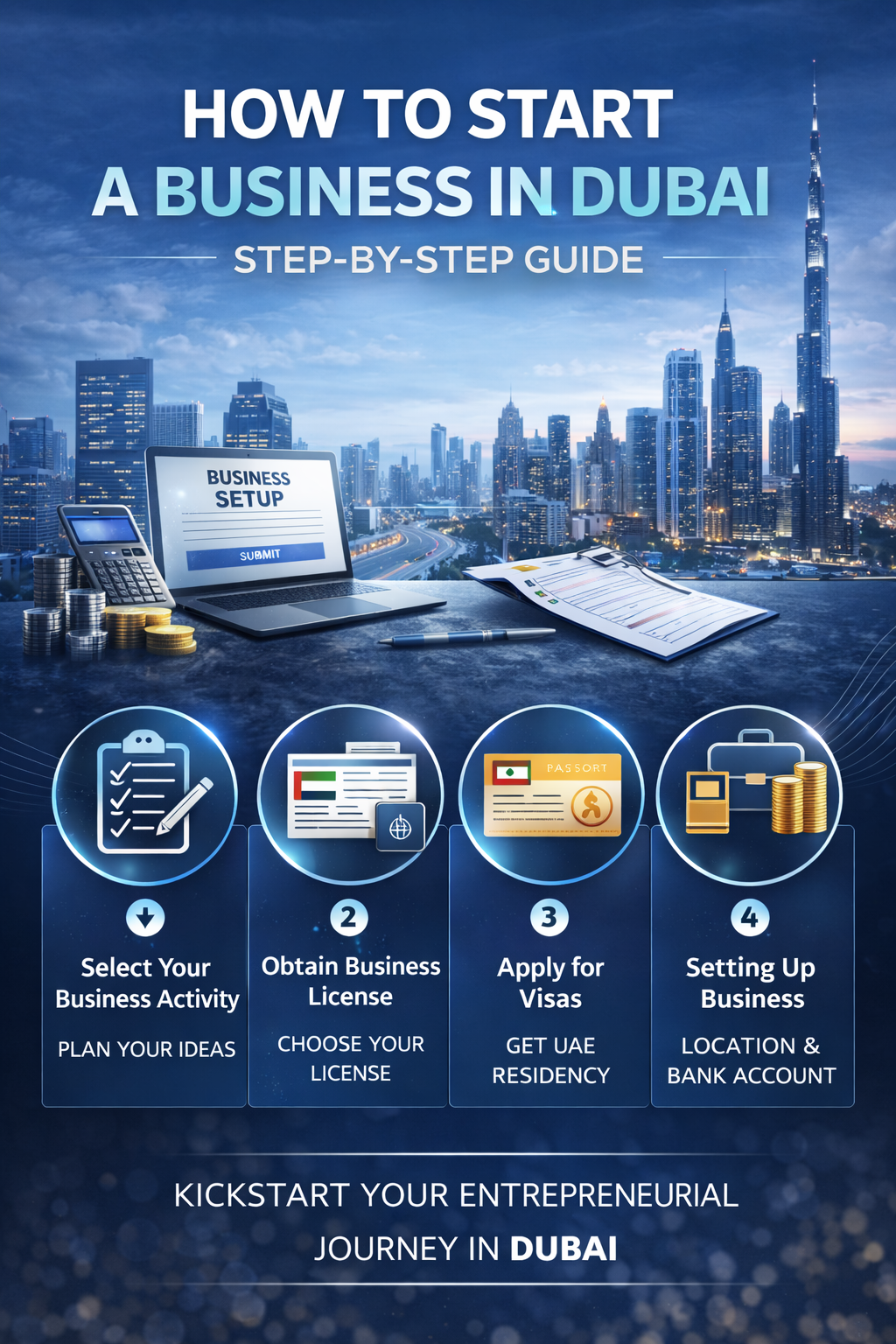

Starting a business in Dubai has become one of the most appealing opportunities for global entrepreneurs. The city blends a strong economy, supportive government policies, tax-friendly laws and a world-class business ecosystem. Whether you want to launch a startup, expand your existing company, or explore new investment opportunities, Dubai provides everything needed to build a profitable and sustainable venture.
This complete, detailed guide walks through every stage of establishing a business in Dubai. From understanding company structures to securing your trade license, complying with legal requirements, and scaling your operations, we cover every step with practical insights to help you move smoothly and confidently.
Why Dubai Is the Ideal Destination for New Businesses
Dubai has evolved into a global business hub, attracting investors from over 190 countries. Its strategic location between Asia, Europe and Africa, along with advanced infrastructure and a diversified economy, ensures long-term growth opportunities.
Key reasons entrepreneurs choose Dubai:
- 0% personal income tax
- 100% foreign ownership in most business sectors
- State-of-the-art infrastructure
- Business-friendly government regulations
- Access to global markets via airports and seaports
- Innovation-driven environment
- Over 40+ Free Zones supporting industry-specific growth
With these advantages, Dubai is considered one of the most secure and profitable places to start a business.
Step-by-Step Guide to Starting a Business in Dubai
1. Choose the Right Business Activity
Your first step is selecting the business activity you want to offer in Dubai. This determines your license type, legal structure and requirements.
Common categories include:
- Commercial activities
- Professional services
- Industrial operations
- E-commerce
- Tourism-based services
- Consultancy services
- Logistics and trading
Over 2,000+ business activities are available under the Department of Economic Development (DED). It’s essential to select the right category because it impacts your approvals and documentation later.
2. Select the Perfect Business Structure
Dubai offers multiple business structures, each suitable for different goals.
Mainland Company
- Operates anywhere in the UAE
- Ideal for companies that need local market access
- 100% foreign ownership allowed
- Greater business flexibility
Free Zone Company
- Operates within a designated Free Zone
- 100% foreign ownership
- Zero import/export duties
- Ideal for international trading, online businesses and startups
Offshore Company
- Not allowed to operate within the UAE
- Used for asset protection, holding companies and tax planning
- Confidential and low maintenance
Choosing the correct structure ensures you stay compliant and scalable.
3. Decide on Your Company Name
Dubai has clear naming guidelines that must be followed:
- No offensive or religious words
- No abbreviations for personal names
- Must reflect your business nature
- Should be unique
- Must be approved by DED or Free Zone authority
Once approved, the name is reserved for you.
4. Apply for Initial Approval
Initial approval confirms that the UAE government has no objection to your business. It allows you to proceed with the remaining formalities.
Documents typically required:
- Passport copies of all shareholders
- Business activity details
- Application form
This approval does not allow you to start operations yet, but it is a mandatory step.
5. Draft the Memorandum of Association (MOA)
An MOA outlines:
- Ownership structure
- Profit and loss distribution
- Business activities
- Rights and responsibilities of partners
Mainland businesses require an MOA notarized by a Dubai notary public, while Free Zone companies follow their own format.
6. Choose Your Business Location
Your physical presence is mandatory for most business types in Dubai.
Options include:
Mainland Office Space
- Traditional office
- Coworking space
- Virtual office (depending on license)
Free Zone Facilities
- Flexi-desk
- Shared office
- Premium office
- Warehouses and industrial units
Location selection depends on your activity, budget and operational needs.
7. Submit Documents and Collect Your Trade License
A trade license is the legal document allowing you to operate your business.
Types of trade licenses:
- Commercial License (trading)
- Professional License (services)
- Industrial License (manufacturing)
- Tourism License
Documents usually required:
- Passport copies
- MOA
- Initial approval certificate
- Tenancy contract (Ejari for mainland)
- Business activity form
Once issued, you can officially run your business in Dubai.
8. Apply for Establishment Card and UAE Residency Visa
The establishment card is required to sponsor visas for owners and employees.
You can apply for:
- Investor visa
- Partner visa
- Employee visas
A typical visa process includes:
- Entry permit
- Medical fitness test
- Emirates ID
- Visa stamping
9. Open a Corporate Bank Account
Dubai offers a robust banking network with top global and regional banks.
To open a bank account, you may need:
- Trade license
- Passport copies
- Company documents
- Shareholder details
- Business plan (for certain activities)
Banks may conduct compliance checks, so proper documentation is essential.
10. Register for Corporate Tax and VAT (If Applicable)
The UAE introduced 9% corporate tax, applicable only if your net profit exceeds AED 375,000.
VAT registration applies to companies with:
- Turnover above AED 375,000 (mandatory)
- Turnover above AED 187,500 (voluntary)
Timely compliance avoids penalties.
11. Build Your Brand and Launch Your Business
After completing legal formalities, it’s time to prepare for launch.
Key steps:
- Build a website
- Set up digital marketing campaigns
- Register with Google My Business
- Create social media profiles
- Develop your brand identity
Dubai’s competitive market rewards strong branding and a clear value proposition.
Cost of Starting a Business in Dubai
The cost varies based on license type, location and visa requirements. On average:
- Free Zone license: AED 12,000 – AED 50,000
- Mainland license: AED 15,000 – AED 40,000
- Office rent: AED 10,000 – AED 100,000 per year
- Visa cost: AED 3,500 – AED 7,500 per visa
Benefits of Starting a Business in Dubai
Dubai continues to attract global investors due to:
- 100% foreign ownership
- Tax-free income
- No currency restrictions
- Advanced infrastructure
- Stable political environment
- Strong legal protection
- Simplified business registration
Dubai’s stable and future-focused economy makes it a reliable choice for long-term investments.
Required Documents for Dubai Business Setup
- Passport copies of all partners
- Two passport-sized photos
- Business activity details
- Trade name reservation
- Initial approval
- MOA/LSA agreement
- Ejari/Lease agreement
- Emirates ID copies (if applicable)
Best Free Zones in Dubai for New Businesses
- Dubai Multi Commodities Centre (DMCC)
- Dubai Silicon Oasis (DSO)
- Jebel Ali Free Zone (JAFZA)
- Dubai Internet City
- Dubai Media City
- Dubai Healthcare City
- Dubai South
Each Free Zone specializes in different industries, allowing tailored business environments.
Common Challenges and How to Avoid Them
- Choosing the wrong business structure
- Misunderstanding ownership requirements
- Delays in documentation
- Not planning for operational costs
- Lack of financial forecasting
Working with experienced business consultants significantly reduces these risks.
Conclusion
Dubai continues to be one of the world’s most thriving environments for new businesses. With strategic planning, proper documentation and compliance, your business can flourish in this fast-growing commercial hub.